A Major Milestone: Replate Receives Patent for Food Recovery Technology
It’s official - Replate now has a patent for our food donor and recipient matching technology!
The Need
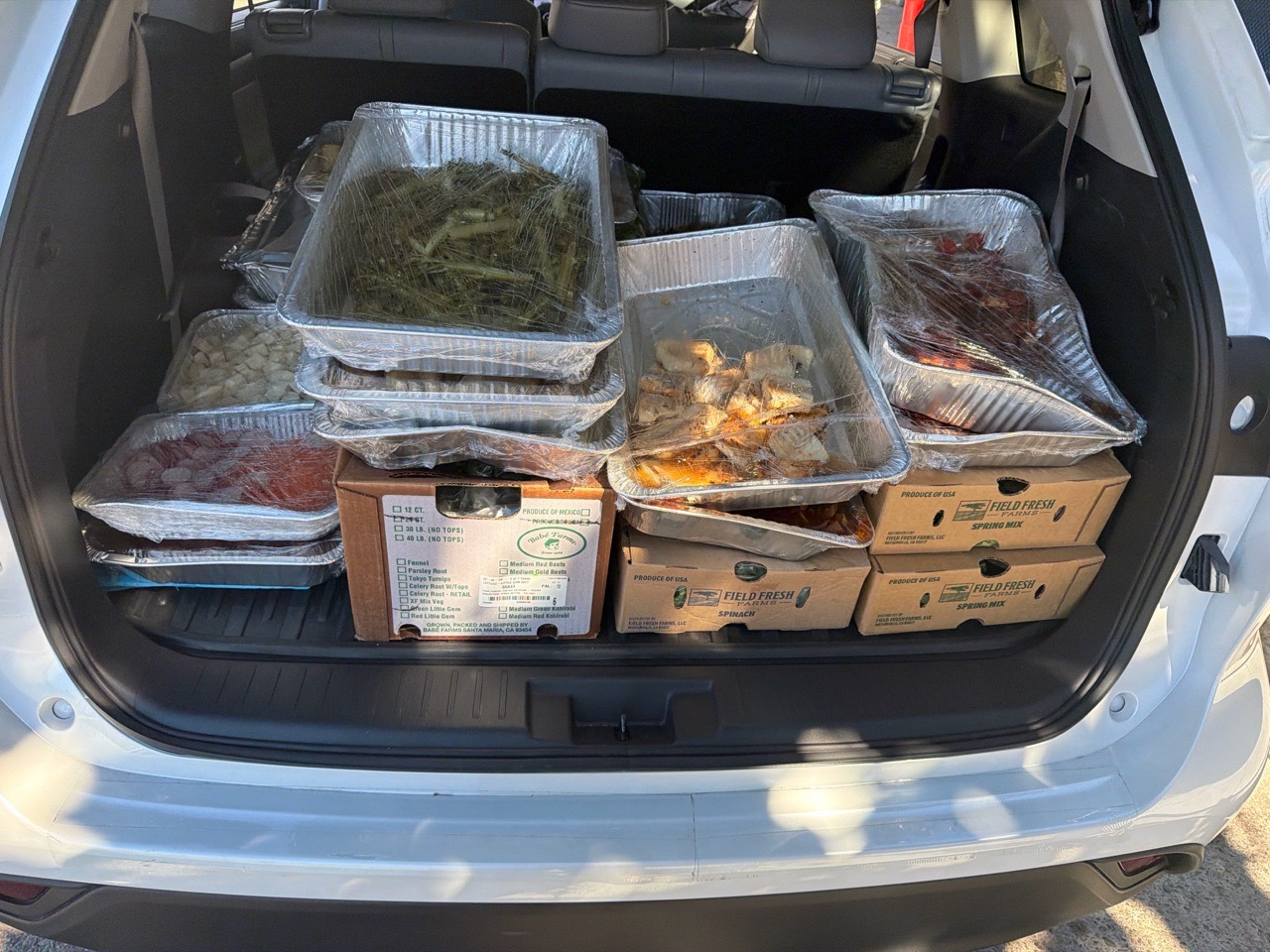
Typically, ‘matching’ in food recovery involves non-profit staff manually matching surplus food, from a food generator/donor, to a recipient organization that can receive and repurpose that food.
This procedure can be time-consuming to manage on a consistent basis, as it also involves managing schedules for both the food generator and recipient as well as their shifting needs.
As a manual process, this can also include making multiple phone calls to different potential recipients, organizing different logistics (drivers) based on best fits, and other related tasks.
Replate’s patented technology simplifies this process significantly. Through an AI-powered matching system developed by our engineering team, this process can be largely automated. The technology first determines the best donor-recipient matches based on operational constraints, then assigns those tasks to drivers while optimizing routes and delivery costs.
The algorithm gathers administrative information already stored in the Replate platform and uses it to consider donor-recipient compatibility, food demand, estimated food supply, operating time windows, recipient priorities, and transportation constraints before making recommendations.
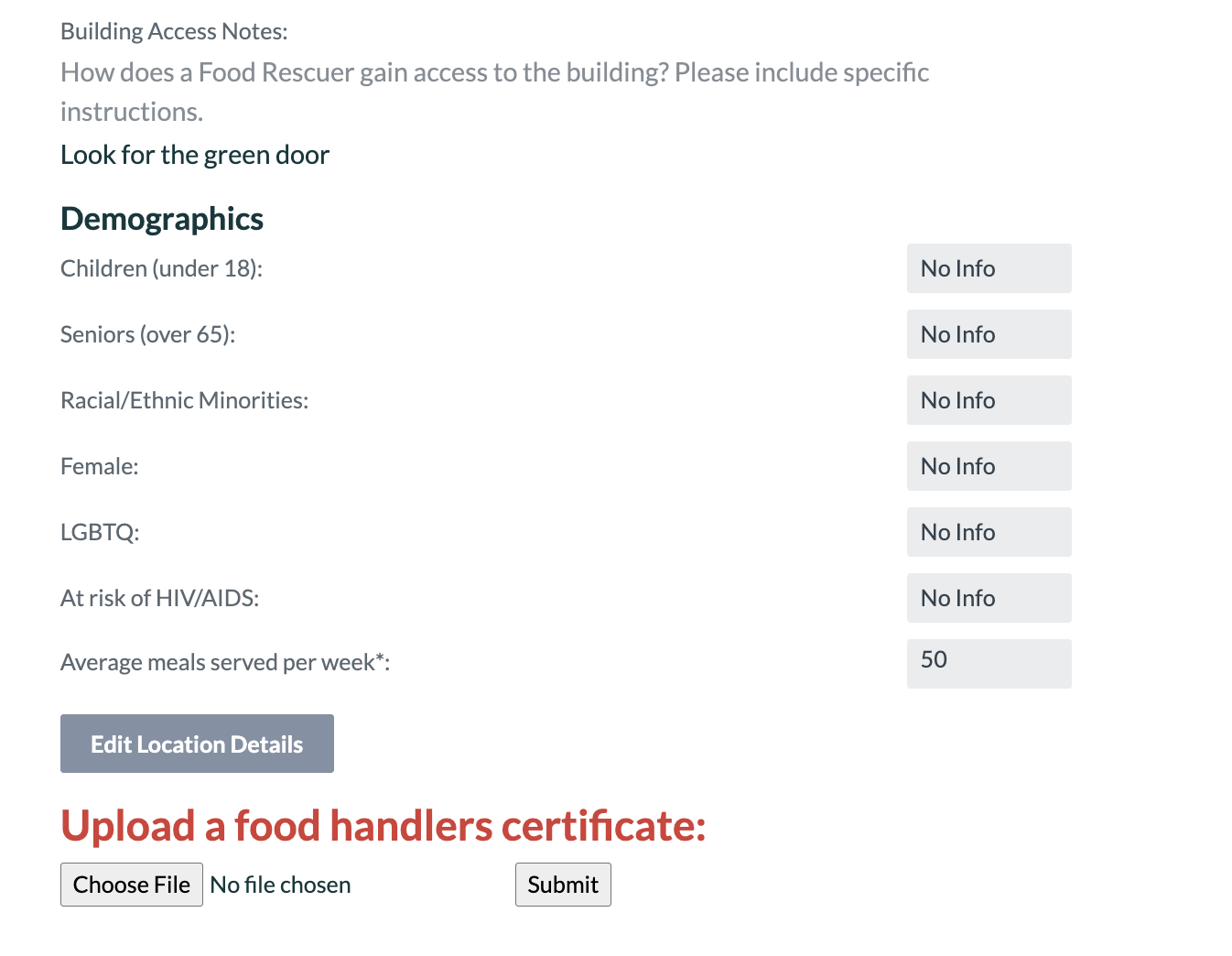
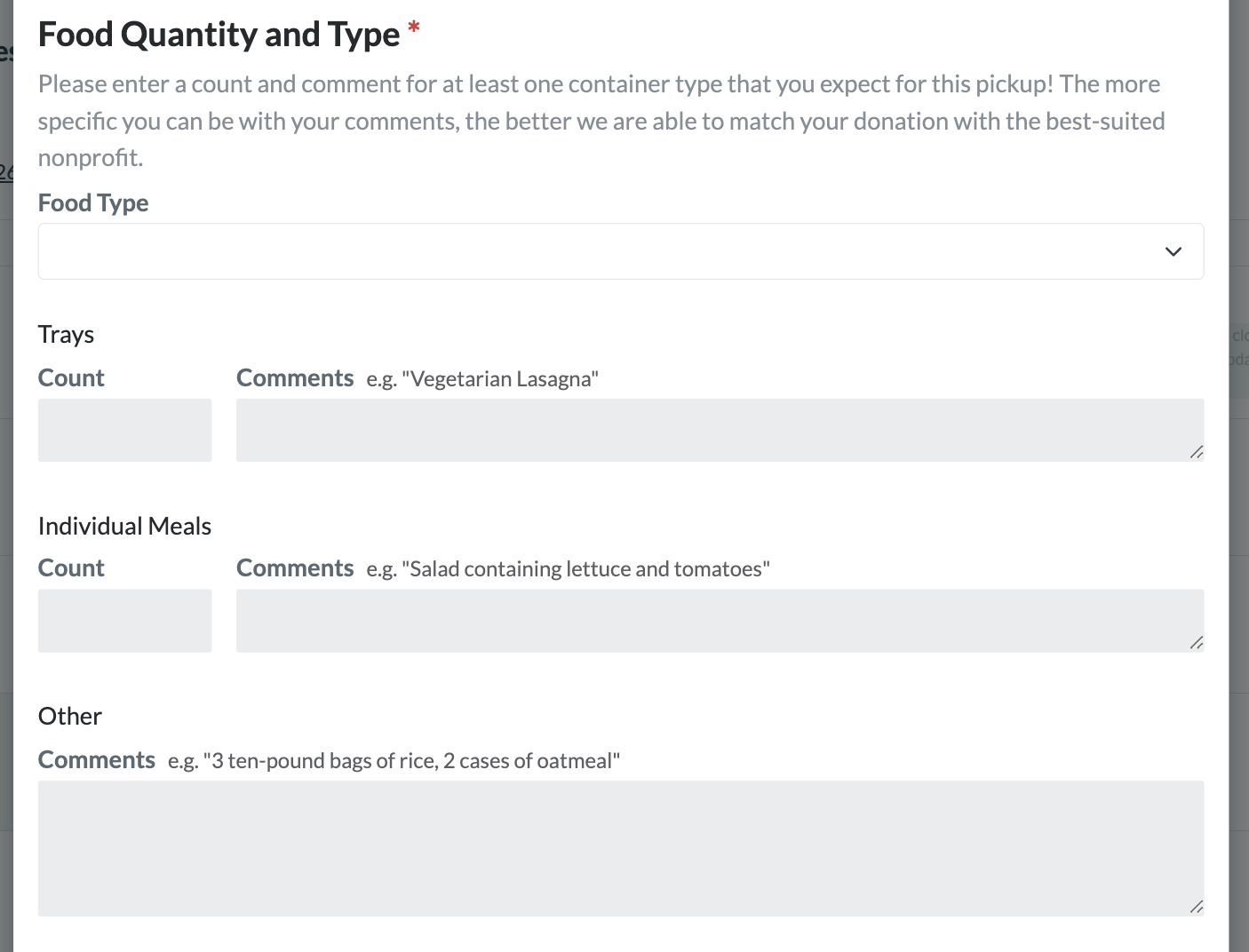
Example of parameters the Replate platform offers to recipients (above) and food generators (below) - all of which assist with matching.
Optimizing Food Recovery from End to End
Technology is invaluable when looking to scale a multi-layered process like food recovery. Though human intervention will always play a role, having technology in place to reduce any inefficiencies in the end-to-end process should always be a priority.
Replate’s patented AI technology allows for smaller food rescue organizations to more efficiently carry out food rescues and expand their reach, while also empowering larger organizations to be more prepared when establishing a new service area.
The algorithm involved in Replate’s technology involves a few rather complex formulas, but some of the main parameters/variables are as follows:
✅ Driver availability and shift windows
✅ Vehicle type and carrying capacity
✅ Pickup and delivery time windows
✅ Donor-recipient compatibility
✅ Recipient food demand and priority level
✅ Estimated donation volume
✅ Distance and travel time
✅ External logistics partners when appropriate
The established parameters here aim to optimize food recovery in two main ways:
1) Keeping the process as equitable as possible by using objective, data-driven criteria to make matching decisions. This ensures that all eligible recipient organizations in our network have the opportunity to receive food, regardless of their demographics or location.
2) Maximizing efficiency - which means that available drivers and other involved parties can complete more pickups and deliveries each day. By optimizing routes and reducing travel time, the system can recover more surplus food before it goes to waste, while also lowering transportation costs and CO₂ emissions.
Practical Applications and Concluding Thoughts
At the most simple level, the matching process begins when a food generator puts in a request for a pickup via Replate’s website.
This request will typically contain information regarding the preferred pickup window, amount of food, and type of packaging. Once this request is confirmed, the platform first identifies the most appropriate recipient for the donation. Once those matches are established, the routing system determines which driver should complete each pickup and delivery while simultaneously optimizing the day's routes.
The process can also be scheduled to run automatically ahead of each service day, while still allowing Operations teams to manually review or rerun assignments as new donations come in.
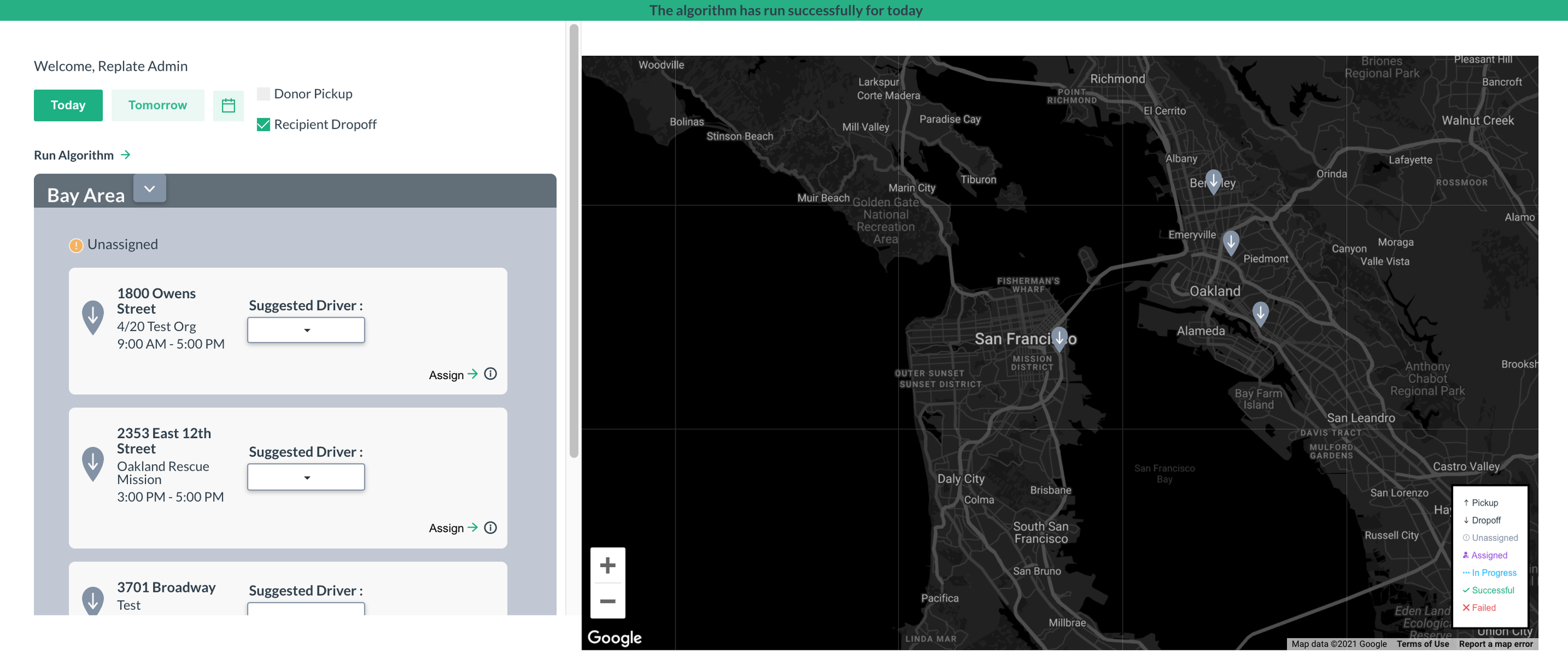
Example mockup showing tasks and their distance from one another.
This patented technology will help to further support Replate’s mission of recovering as much edible, surplus food from local businesses as possible while also maintaining healthy cost margins as an organization. While keeping food out of landfills and re-circulating it back into local communities is our main goal, healthy financial operations are also essential to ensure that we can continue to operate and scale at a sustainable level.
Food rescue tends to be a complex process that involves several variables and heavy manual intervention. With smart usage of this AI optimization system, essential information is used to automatically generate operational recommendations that previously required significant manual coordination.
We’re grateful to have acquired this patent, as it illustrates not only how far food rescue has come as a professional endeavor, but also how far we’ve come as an organization!